Chapter 2 - Theory
5. Role of IoT in maritime systems
The Internet of Things (IoT) refers to a network of interconnected physical devices embedded with sensors, software, and technologies that enable the collection, exchange, and processing of data. These devices communicate over the internet or other networks, allowing for automation, real-time monitoring, and data-driven decision-making (Wikipedia, 2024). To achieve these capabilities, IoT systems are designed with an architecture organized into distinct layers, each addressing specific aspects of data collection, transmission, and processing. The architecture typically comprises three core layers, the Perception, Network, and Application layers which serve as the foundation, and can extend to as many as seven layers for more advanced systems. While there is no unified taxonomy, the additional layers provide more functionality while retaining the same core purpose as shown in Figure 1.
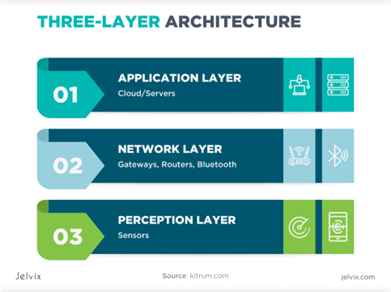
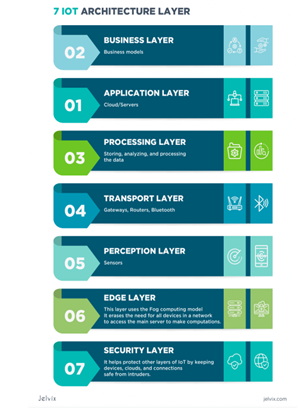
Figure 1: Comparison of three-layer and seven-layer IoT architectures
IoT Architecture layers
The Perception layer serves as the interface between the physical world and the digital ecosystem. It is responsible for collecting data from the environment using sensors and interacting with it through actuators. An actuator is a machine that moves or controls components in a system by converting energy into physical motion. Devices such as temperature sensors, pressure sensors, RFID tags, and environmental monitors gather data, while actuators perform physical actions based on processed data. Communication within this layer is facilitated by technologies like Wireless Sensor Networks (WSN), Low-Power Wide Area Networks (LPWAN), and mobile networks supported by protocols such as MQTT, CoAP, and AMQP, which enable efficient device-to-device (M2M) communication.
The Network layer handles the transmission of data collected by the Perception Layer to other parts of the IoT architecture. It ensures secure, reliable, and efficient communication using various protocols and technologies. Transmission technologies such as Ethernet, Wi-Fi, NFC, Bluetooth, mobile networks, LPWAN, and satellite communications are used. Additionally, machine-to-machine (M2M) protocols such as MQTT, CoAP, AMQP, and DDS enable effective data exchange, while gateways and bridges facilitate seamless communication between devices and higher-level layers.
The Application Layer provides services and interfaces for end-users. It interprets and visualizes data, often enabling interaction through Human-Machine Interfaces (HMIs). Dashboards and analytics platforms process data into user-friendly formats like graphs and reports, making it accessible for decision-making. Cloud and edge computing handle large-scale analytics and real-time computations, while HMIs and mobile applications allow users to interact with the IoT system in a seamless manner.
Depending on the application and complexity of the system, the IoT architecture can include additional layers such as the Processing, Business, Edge, and Security Layers, each addressing specific challenges.
The Processing Layer involves data accumulation and abstraction, gathering and storing data on devices, hard drives, or databases for future use. It also combines IoT and non-IoT data for meaningful insights.
The Security Layer provides essential protection against IoT-related threats by safeguarding sensitive data and maintaining system integrity. In maritime environments, this layer must address cybersecurity challenges like spoofing, hacking, and denial-of-service attacks.
The Business Layer focuses on delivering user-friendly information, transforming raw data into actionable insights presented as charts or reports, vital for strategic and operational decision-making.
The Edge Layer, positioned between the Network and Processing Layers, performs localized computations to reduce latency and bandwidth usage. Most data are processed and stored locally, minimizing reliance on cloud systems which eliminates the need to send information to remote servers. This is especially beneficial in maritime settings, where intermittent connectivity is a common challenge.
Applications of IoT in maritime
In maritime systems, IoT integrates advanced sensors, communication technologies, and data hubs to improve operational efficiency, safety, environmental sustainability, and ship design. Applications of IoT extend across a range of entities such as vessels, offshore platforms, navigation buoys, and ports as shown in Figure 2.
Sensors like GPS and DGPS provide precise navigation, while weather instruments supply real-time meteorological data (Sanchez-Gonzalez et al., 2019). Cargo sensors monitor conditions such as temperature and humidity, and engine sensors enable predictive maintenance, reducing downtime and preventing unexpected failures. Environmental sensors further ensure regulatory compliance by tracking water quality, pollution, and the health of marine ecosystems. They also inform improvements in ship design, facilitating more energy-efficient vessels (Ang et al., 2017).
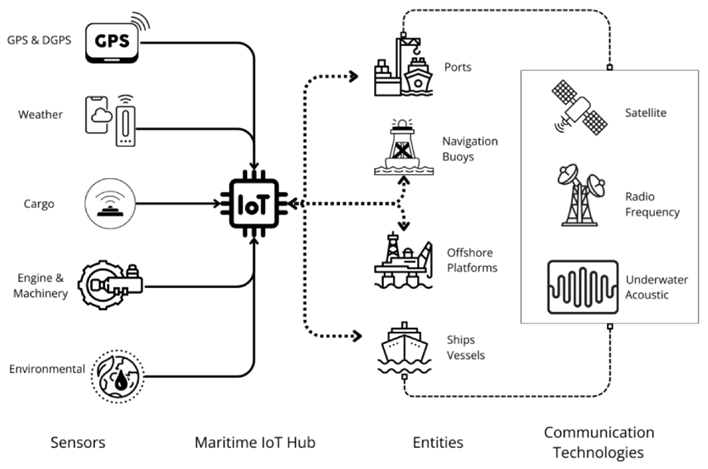
Figure 2: Applications of Internet of Things in maritime.
(Durlik et al., 2023)
At the center of these interconnected systems is the maritime IoT hub, which processes data from ships, ports, navigation buoys, and offshore platforms. Within port environments, IoT-enabled approaches improve cargo handling, warehouse management, and logistics by providing real-time monitoring and control. Onboard ships, IoT systems help optimize fuel consumption, navigation routes, and maintenance schedules, while offshore platforms rely on IoT to observe equipment performance and environmental conditions, safeguarding both safety and operational efficiency. Identification technologies, including QR codes and RFID, enhance tracking, tracing, and control of shipyard components (Fraga-Lamas et al., 2016).
IoT plays an important role in transforming the maritime industry by enhancing efficiency, sustainability, and environmental monitoring through a range of innovative solutions. In shipping, RFID systems are widely used for tracking and management, while middleware platforms enable seamless information exchange between vessels and traffic services (KATAYAMA et al., 2012). IoT-based frameworks further support container tracking, optimizing operational economics and improving supply chain efficiency. To ensure real-time data transmission and decision-making, communication technologies such as satellites, radio frequencies, and underwater acoustics are deployed, enabling reliable connectivity even in remote maritime environments (Choi et al., 2017). In port settings, RFID-based warehouse management systems address critical challenges like scalability, fault tolerance, and privacy, streamlining cargo handling and logistics operations (Goudarzi et al., 2016).
Beyond operational improvements, IoT significantly contributes to marine environmental monitoring by tracking key ocean parameters such as temperature, pH, dissolved oxygen, waves, and currents. These systems also oversee coral reef habitats, deep-sea fish farms, and pollution levels, serving both environmental and navigational purposes. Additionally, IoT-driven platforms analyze pressure and temperature fluctuations in specific regions, as well as monitor oil and gas fields, ensuring safe and sustainable operations (Kabanov and Kramar, 2022).
In conclusion, IoT is enabling smarter shipping, port management, and environmental monitoring systems, which is transforming the maritime sector. The industry's shift to more sustainable and efficient practices is aided by its capacity to deliver real-time insights and predictive analytics. Research and applications continue to evolve, tackling issues and revealing new opportunities in this industry.